World Cup 2026 Qualified Teams: How to Track Teams & Squads via API
Image of David Jaja
Author

David Jaja

David Jaja is a technical content manager at Sportmonks, where he makes complex football data easier to understand for developers and businesses. With a background in frontend development and technical writing, he helps bridge the gap between technology and sports data. Through clear, insightful content, he ensures Sportmonks' APIs are accessible and easy to use, empowering developers to build standout football applications

Recent articles by David Jaja

All articles
World Cup 2026 Qualified Teams: How to Track Teams & Squads via API

The FIFA World Cup 2026 will make history as the first 48-team tournament, featuring qualified teams from all six confederations worldwide. Given the expansive competition, having programmatic access to team information, squad lists, and player data is essential for developers building World Cup applications, fantasy games, statistics platforms, or news portals. This comprehensive guide shows you exactly how to track all World Cup 2026 qualified teams and their squads using the Sportmonks Football API.

Time to read 7 min
Published February 25, 2026
Last updated February 25, 2026
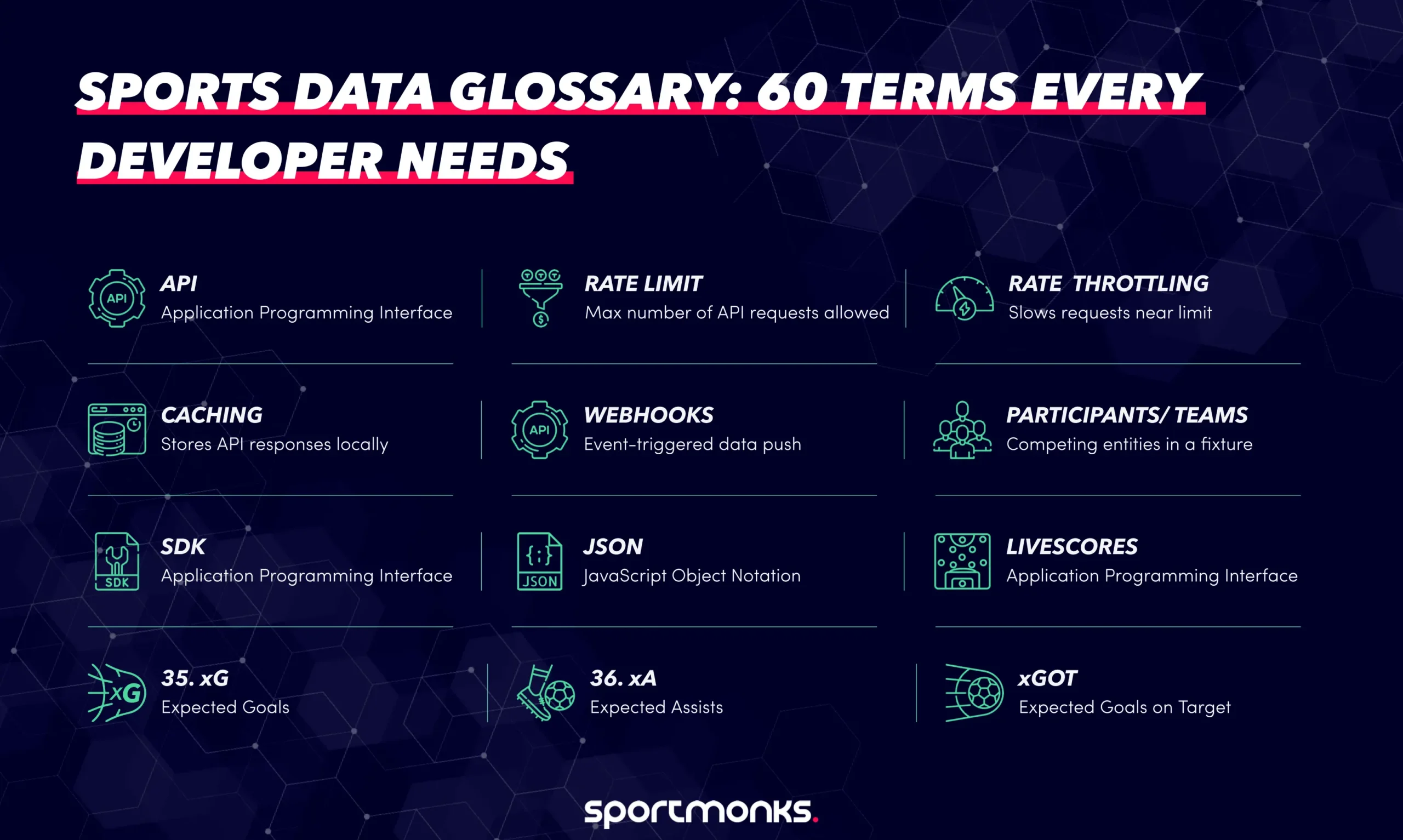
Sports data glossary: 60 terms every developer needs

Building with sports data means navigating two vocabularies at once. On one side, you have the sports world: fixtures, standings, expected goals, clean sheets, handicaps. On the other hand, you have the API layer: endpoints, rate limits, pagination, webhooks, and caching. Misunderstanding a term on either side can mean hours of debugging, mismodeled data, or an app that doesn’t behave the way it should.

Time to read 12 min
Published February 23, 2026
Last updated February 23, 2026

How to build a live cricket score tracker

Cricket is one of the world’s most followed sports, with an estimated 2.5 billion fans globally, second only to football in overall popularity. Major tournaments like the Cricket World Cup and the Indian Premier League (IPL) attract record viewership, with World Cup matches reaching billions of viewers worldwide and the IPL final drawing hundreds of millions across TV and digital platforms. These events generate massive engagement and long watch times, showing cricket’s huge appeal on both traditional and streaming media. The sport’s popularity spans continents and is a major driver of live sports consumption online and on mobile.

Time to read 9 min
Published February 12, 2026
Last updated February 12, 2026
The beginner’s guide to the Sportmonks Motorsport API

Welcome to the Sportmonks Motorsport API v3. This guide helps you get started building motorsport data-driven applications such as live race trackers, fantasy F1 platforms, and analytics dashboards. The API delivers comprehensive Formula 1 data via a modern REST API with JSON responses, covering real-time race updates and detailed lap-by-lap telemetry. Important: Motorsport API v3 is currently in beta. While fully functional, you may see ongoing updates and improvements. For support, contact [email protected].

Time to read 9 min
Published February 10, 2026
Last updated February 10, 2026
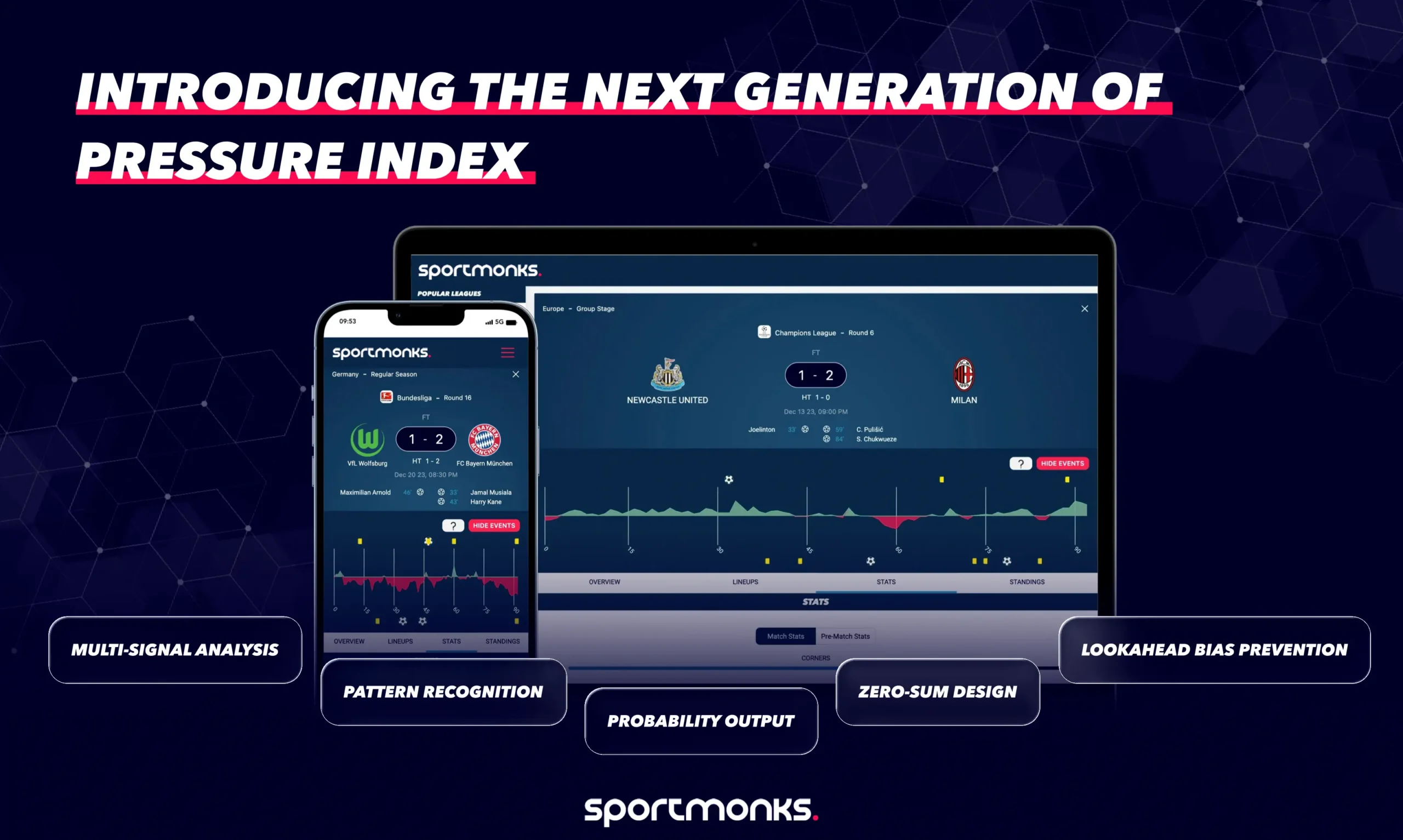
Introducing the next generation of Pressure Index

We’re excited to announce an update to the Pressure Index. The updated model has been running since 31 January 2026 and is designed to help developers and analysts understand which team has recently created the most meaningful scoring threat, using live match data. For customers using the Sportmonks Football API, the Pressure Index is a compact “momentum” signal you can plot and query to support live dashboards, match centres, commentary tooling, and post‑match analysis.

Time to read 9 min
Published February 10, 2026
Last updated February 23, 2026

How Football Clubs Use Data Analytics to Improve Performance

These days, football clubs can’t rely on instinct alone. More teams are using data to plan, make decisions, and improve performance both on and off the pitch. From tracking every pass and sprint to analysing player fitness and tactics, data has become a key part of modern football. It’s how clubs find an edge and how the smartest teams stay ahead.

Time to read 12 min
Published January 19, 2026
Last updated January 19, 2026